


The Earliest Known Deaf Resident of Riverside: Adam Sproat Hewetson (1878-1960)
Apr 17
5 min read
Updated: Apr 18

As far as I know as a historian of the local Deaf community, Adam S Hewetson is the earliest known Deaf resident of Riverside.

Adam was born in Montreal, Quebec in Canada. He received his compulsory education, probably at the late age of 10, at the MacKay Institution for Protestant Deaf Mutes in Montreal from 1888 to 1897. The signing community in Montreal uses LSQ, a mixture of LSF (French) and ASL. Adam grew up using LSQ.

As a senior, Adam transferred to the Kendall School for the Deaf on the Gallaudet University campus in Washington, DC. He probably picked up ASL there. As a side note, Gallaudet is probably the only university in the world where a student can start his kindergarten and finish his PhD on the same campus.

After five years at Gallaudet, Adam earned a BA in 1903 and then moved to Riverside, becoming the earliest recorded resident. It is not known what attracted him to Riverside, far from Montreal and Washington DC.
Burt Schmidt (my former CSDR teacher and friend) made friends with Adam in the 1940s. Burt explained that Riverside had a tiny deaf population with sign language for communication in the 1940s. Probably no more than ten to twenty deaf residents in a town with 50,000 residents. It can be assumed that the deaf community was even smaller in 1903.
Burt mentioned Adam to me 30 years ago in the 1990s when I was writing the history book on CSDR. I made a note of Adam Hewetson for safekeeping. Only last week in 2026 did I finally research him and uncover a brief biography for the local Deaf history and the forthcoming Civil Rights exhibition on the Deaf community in Fall 2026
Little is known about Adam’s life in Riverside and San Bernardino from 1903 to 1960. I found out from the Gallaudet archives that he was a citrus tree specialist, his primary occupation for most of his working life. I also learned from Burt what he knew about Adam.

Citrus agriculture was a big business in Riverside from the 1880s to the 1960s. In the 1890s, Riverside boasted the highest per capita income in the US, thanks to the seedless Washington Navel oranges that got their start there. The climate was perfect for growing navel oranges, which could be shipped in refrigerated railroad boxes across the country. Adam worked in the groves at Pachappa Hills not far from the CSDR site.

Adam called himself a citrus tree doctor, like an agricultural specialist who helped growers keep their orange and lemon trees healthy. Their duties were practical and physical.

Adam walked through the groves looking for signs of disease, insects, or poor growth. If he spotted pests, he applied basic treatments like oils, sulfur, or lime mixtures to kill bugs and fungus.

In the groves of thousands of trees, Adam checked each tree for pruning if needed. He cut down dead or diseased limbs to keep trees productive. He kept an eye on potential outbreaks that could kill the whole grove and bankrupt the owners.
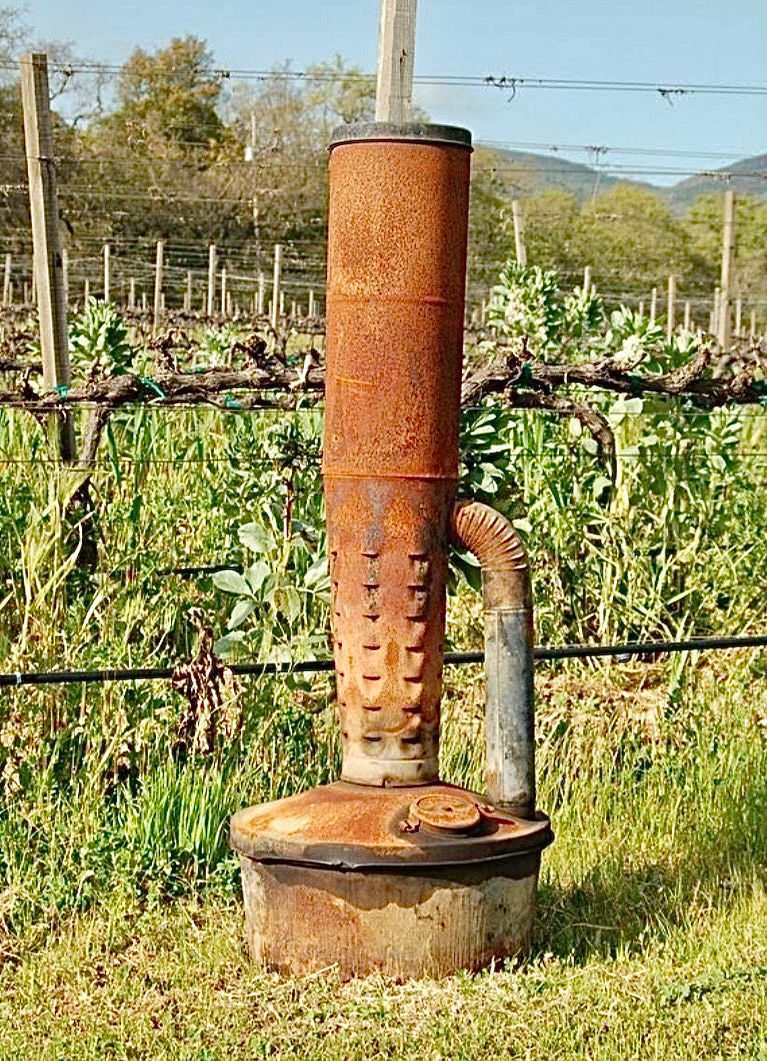
Adam recalled being called to the groves at night for emergency work during frigid winter spells. Citrus fruits could not survive the bitterly cold temperatures for long. To protect the crops, farm workers placed smudge pots at strategic points to help raise the temperature among the trees. The smudge pots had tanks at the bottom filled with kerosene to keep the flames burning through the night. Once the trees were out of danger, Adam went home, tired and dirty, covered in black soot.

When the word got out from Sacramento that the new school site on Arlington Ave had been approved for CSDR in 1948, Burt took Adam to see the undeveloped land one block outside the city limits on Central Ave. They saw the CSDR land with barley covering 75% of the 74-acre farmland, with the remaining 25% for orange trees along Lincoln Ave. They also saw orange trees on Horace and Maude Streets with no houses.
With Pachappa Hills groves only a few blocks away, where Adam worked, he returned periodically to observe the construction of the new school from 1951 to the mid-1950s.

For residence, he rented a room in the three-floor YMCA in downtown Riverside. Later, he moved to an unknown location in San Bernardino County for retirement, where he lived until he died in 1960. He was 81.
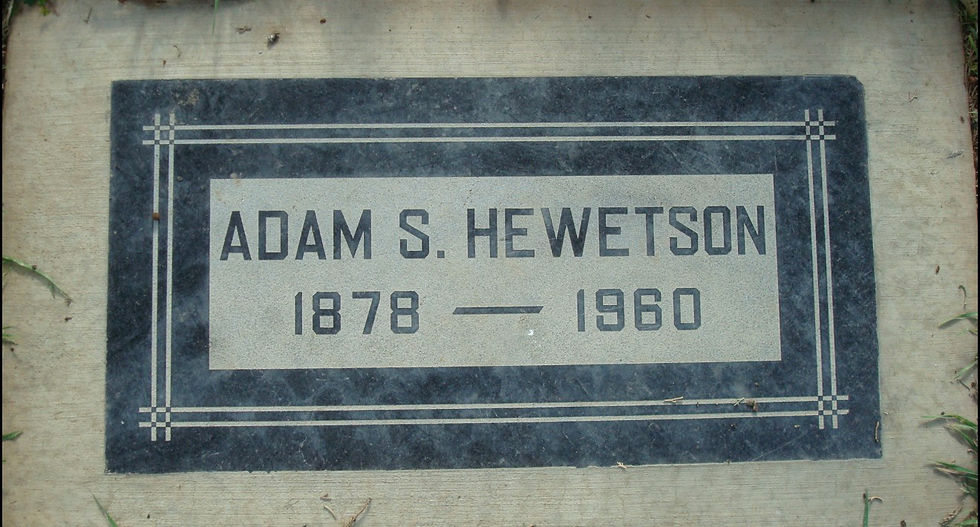
Adam is buried at the Olivewood Cemetery on Central Ave, half a mile from the world-famous school for the deaf on Arlington Ave, which has 400 students. This is a far cry from 1903, when he arrived in Riverside for a new life, when no more than 20 deaf people lived there.


Comments